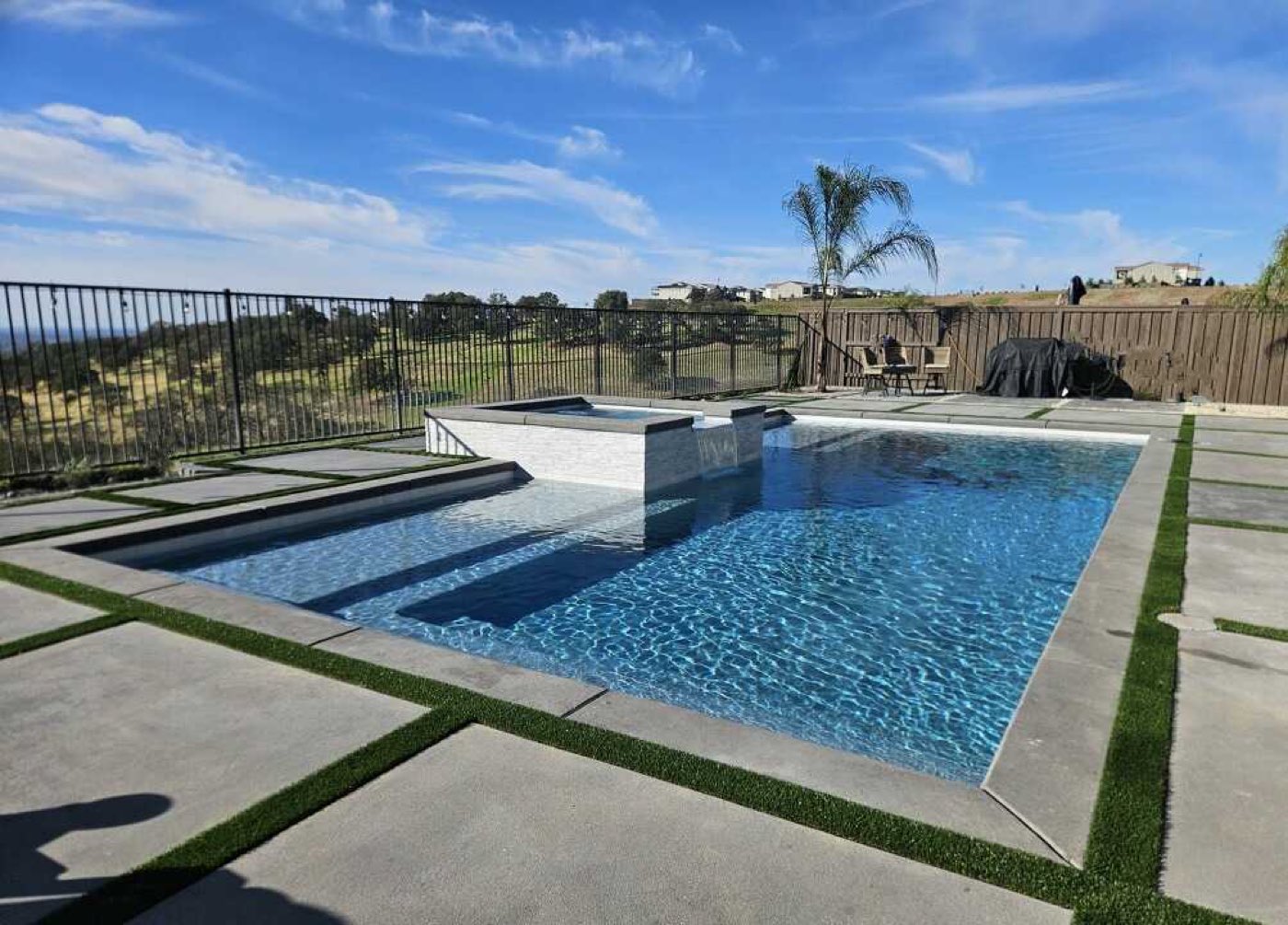
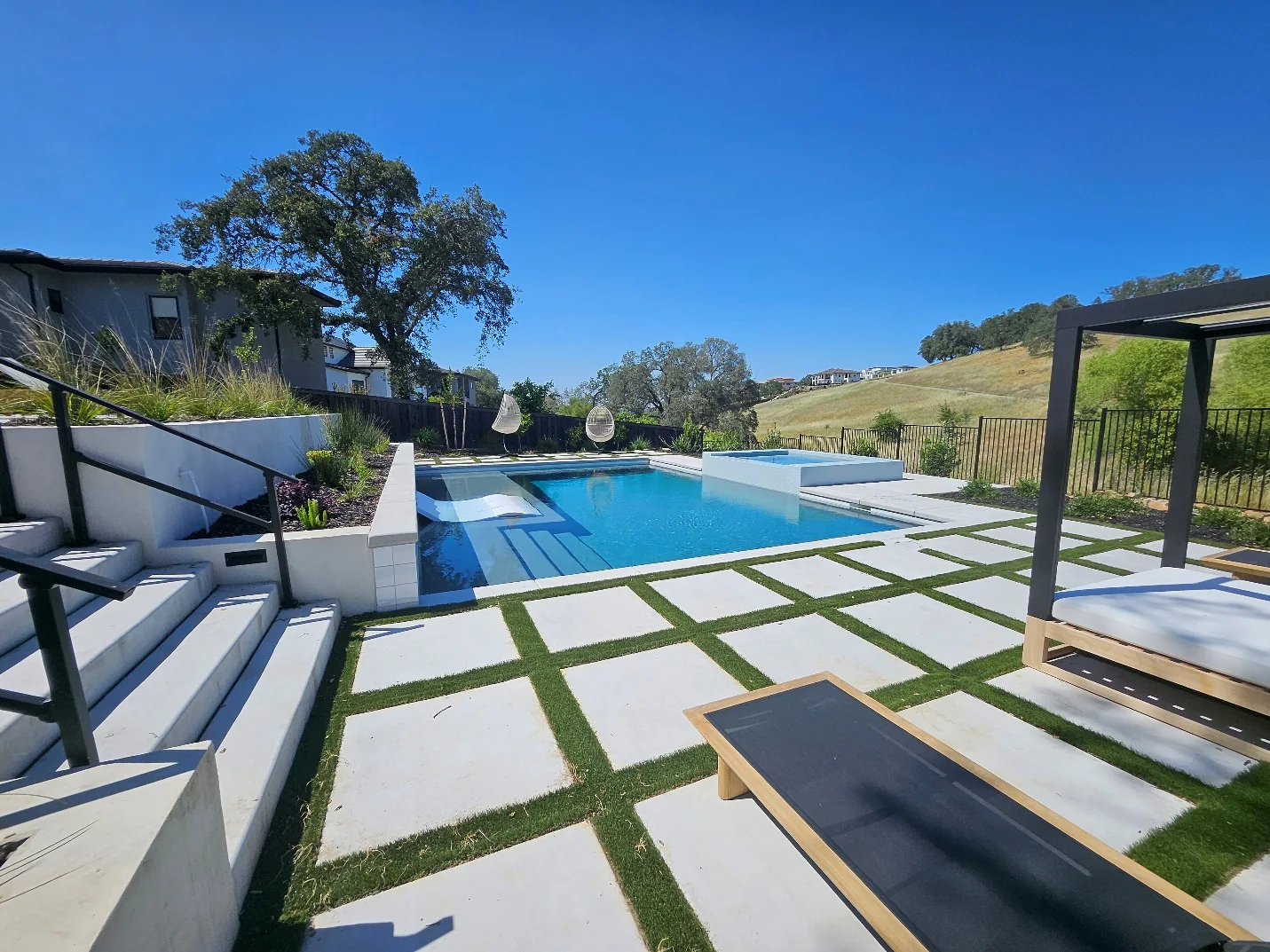
Building a swimming pool on a sloped property can create an incredible backyard, but it can also make the construction process more complicated and more expensive than building a pool on a relatively flat lot.
In many areas throughout Napa, Sonoma, Placer County, Nevada County, El Dorado County, and Sacramento, sloped lots are common. The amount of additional work required depends heavily on the severity of the slope, the location of the pool on the property, the design of the pool, soil conditions, access to the property, and, of course, the recommendations of the structural engineer and geotechnical engineer.
At Cookie Cutter Pools, we are experienced pool builders Nevada County and other areas of Northern California. We have knowledge and experience building custom gunite pools on challenging properties. We understand that every property is different, which is why evaluating the site and potential construction requirements early in the process is so important.
Factors to Consider When Building a Pool on a Sloped Lot
Here are some of the biggest factors to consider when planning a pool on a sloped property.
1. Additional Structural Engineering: Retaining Walls and Freestanding Pool Walls
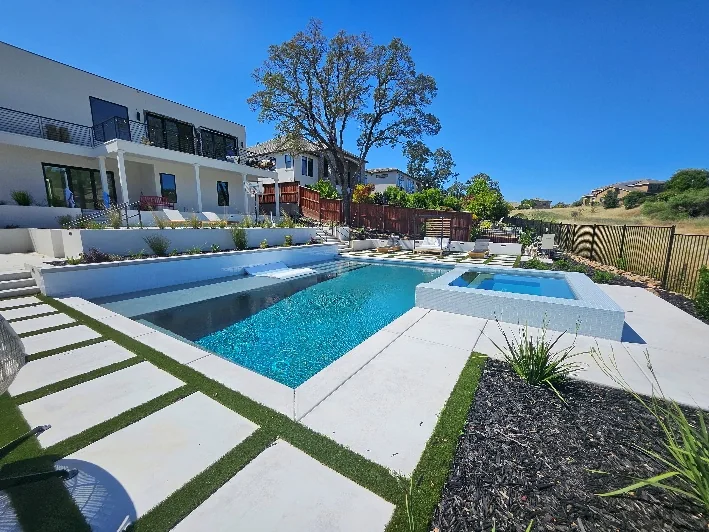
A pool built into a slope may require retaining walls or specially engineered pool walls to handle the surrounding soil.
In some situations, the pool itself can act as part of the retaining system. In other situations, additional retaining walls or structural walls may be necessary.
The requirements are different for every property, so this is one area where engineering is especially important.
A wall that may look relatively simple from above can require substantial excavation, reinforcement, concrete, drainage, and additional structural work.
2. Additional Structural Reinforcement
A pool on a slope can experience different soil pressures than a pool surrounded by relatively level ground.
As a result, the structural design may require additional reinforcement.
This can include:
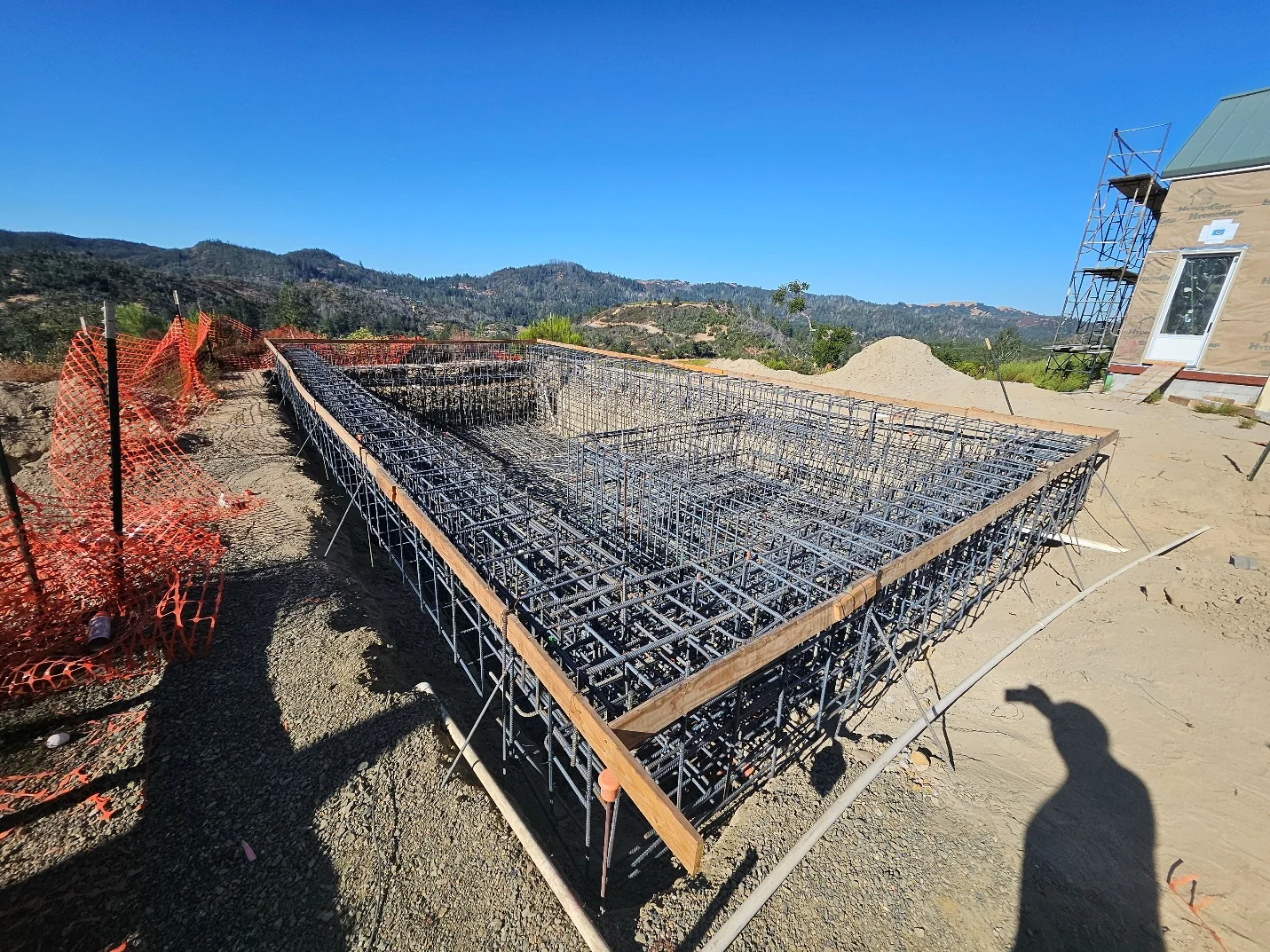
- Additional rebar
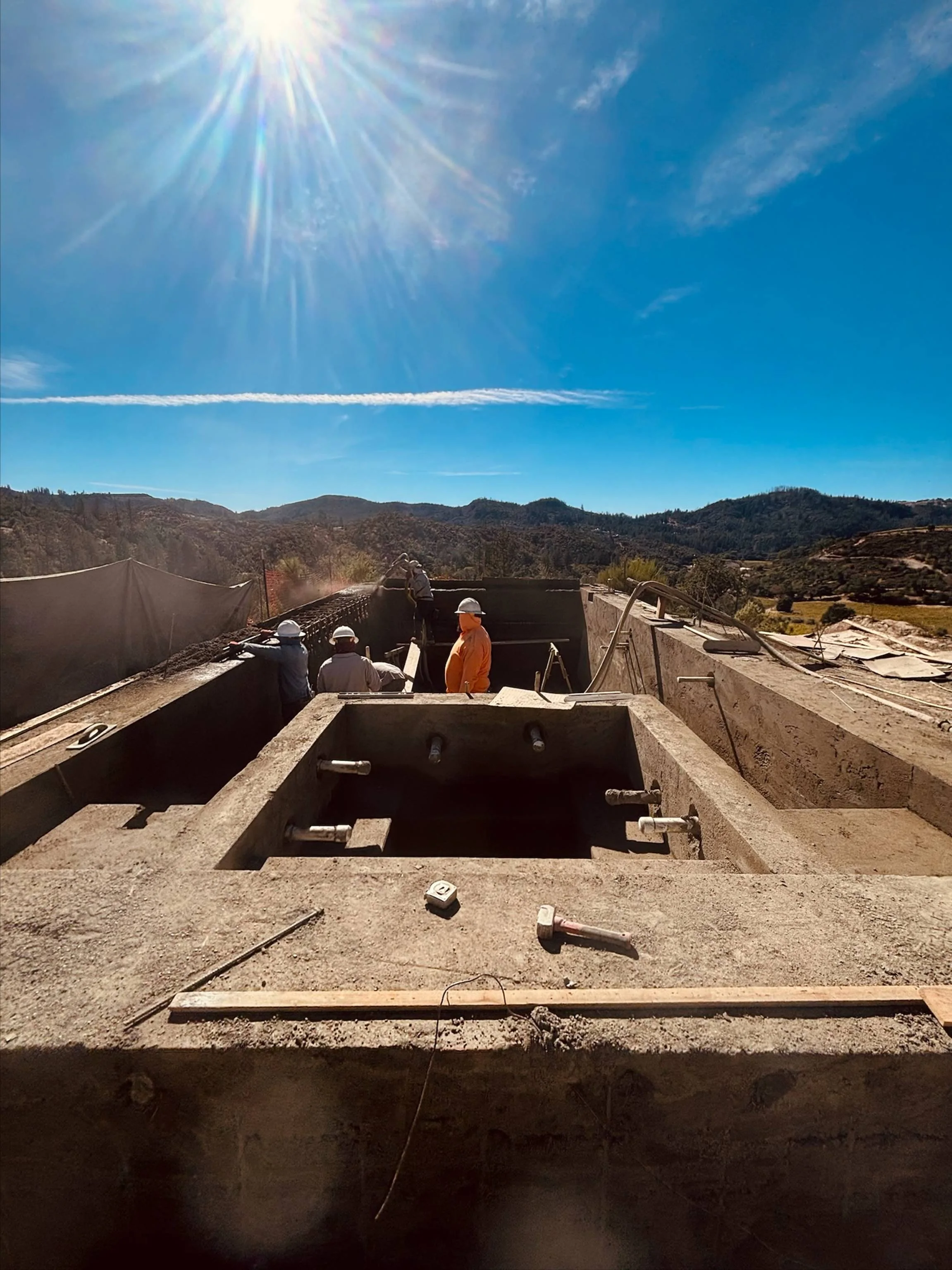
- Thicker gunite or shotcrete walls
- Structural beams
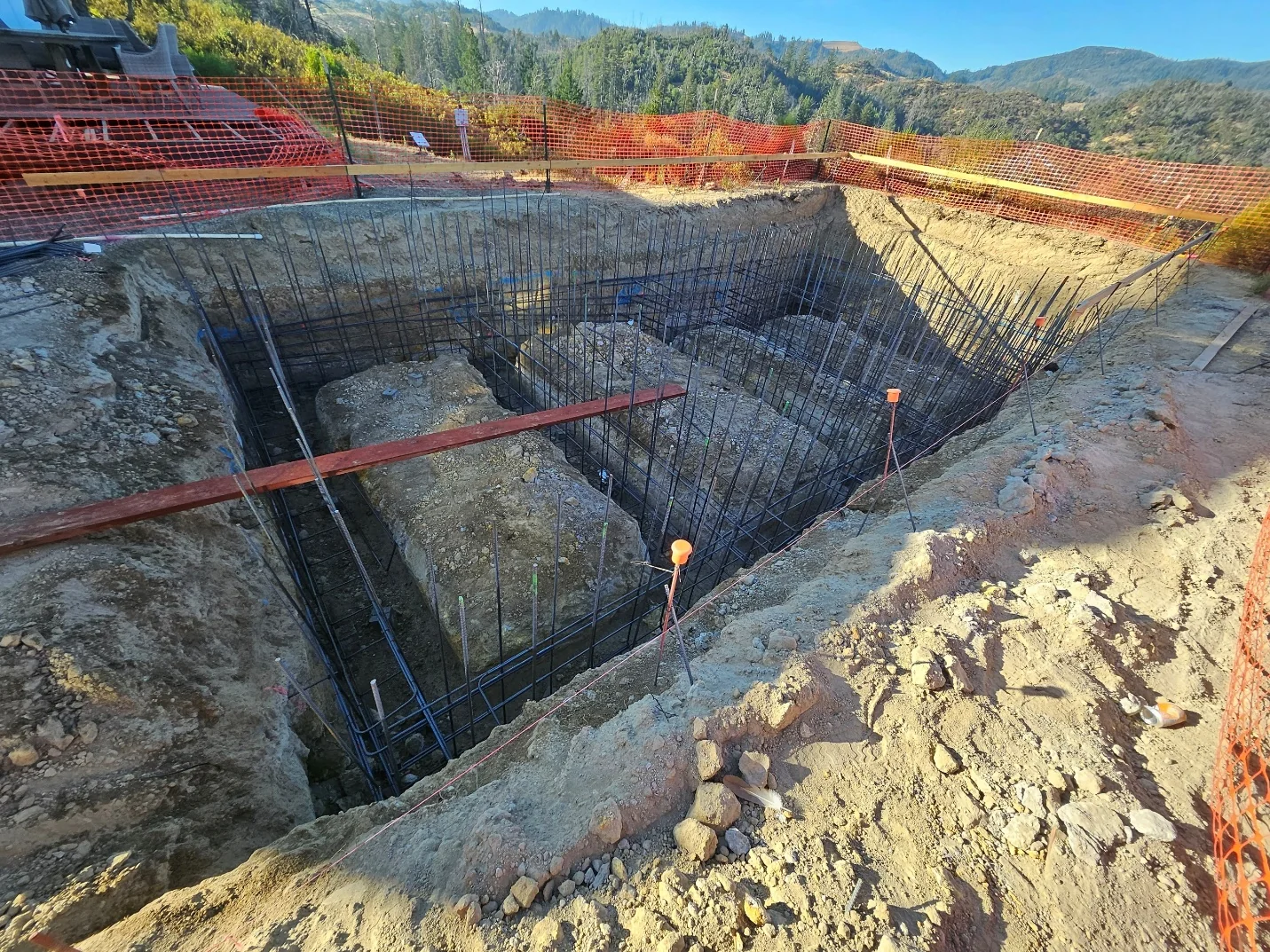
- Additional footings
- Other engineered structural components
The important thing to understand is that pool construction is not one-size-fits-all. Two pools with identical dimensions can have very different structural requirements simply because they are being built on different properties.
3. Geotechnical Engineering
A geotechnical report may be required by the building department for a sloped property. A geotechnical engineer evaluates the soil and site conditions and can provide recommendations regarding excavation, foundations, drainage, slope stability, and other construction requirements.
Depending on the site, the geotechnical report may recommend additional measures such as:
- Deeper or wider footings
- Additional structural support
- Soil removal and replacement
- Compacted fill
- Drainage improvements
- Retaining walls
- Special foundation requirements
These recommendations can have a significant effect on the overall cost of the pool project.
4. Additional Footings
One of the more significant potential costs on a sloped lot is the need for footings.
For example, if the pool is located near a slope or there is a significant elevation change next to the pool, the engineer may require a footing beneath or alongside a pool wall.
The size and depth of the footing will depend on the site conditions and engineering requirements. In some cases, the footing may need to extend significantly below the pool structure to provide the required stability.
Because the depth of competent soil or bedrock is not always known before excavation, footing costs can sometimes be difficult to determine until the site has been evaluated or excavation has begun.
5. Excavation Can Be More Complicated
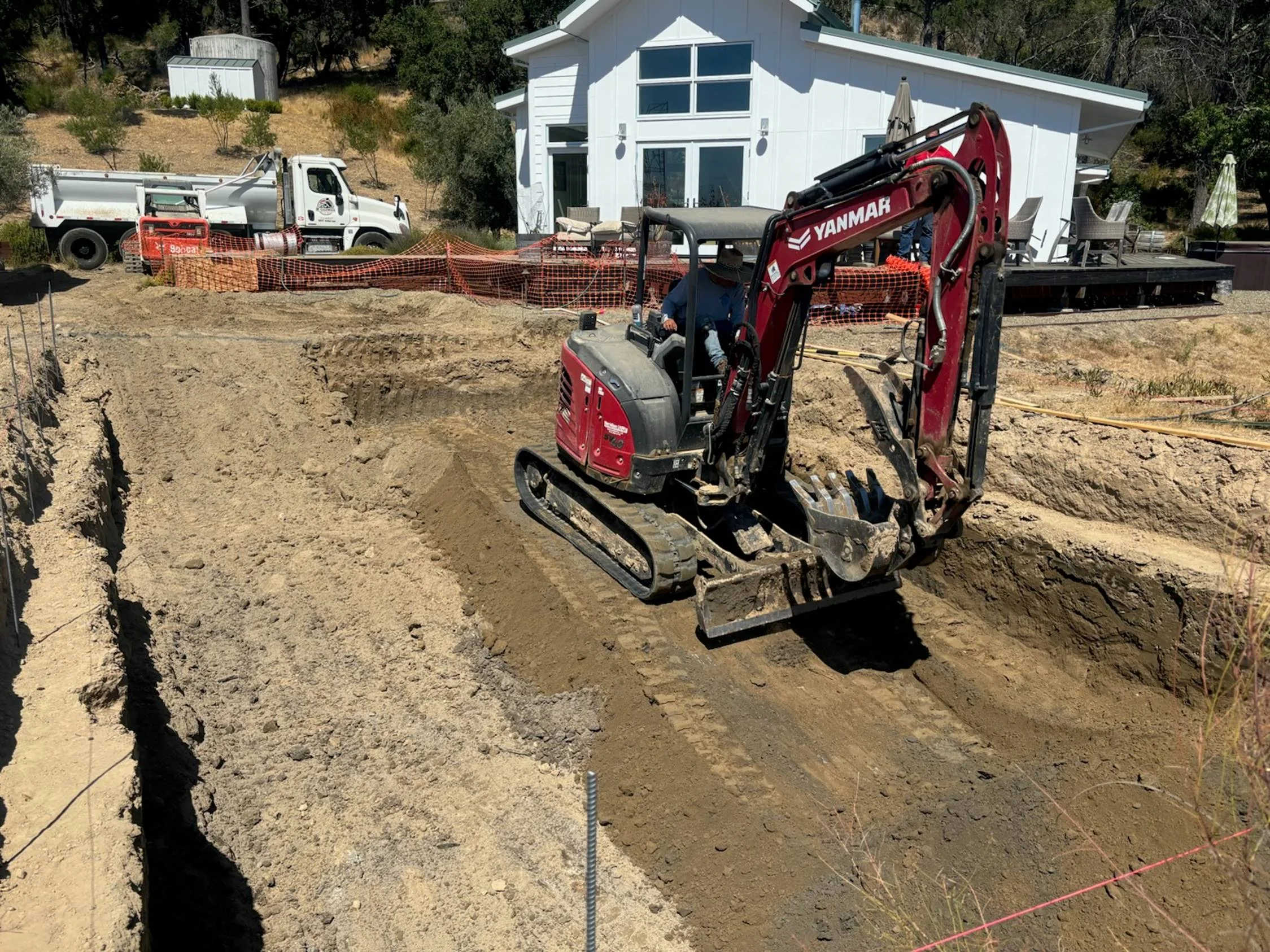
Excavating a pool on a relatively flat lot is generally more straightforward. On a slope, excavation may require significantly more planning and additional work.
Depending on the property, the project may involve:
- Additional excavation
- Removal of excess soil
- Difficult-to-access areas
- Rock excavation
- Additional grading
The amount of excavation required can also depend on exactly where the pool is positioned on the slope. Sometimes adjusting the pool’s location or elevation during the design process can make a significant difference in the amount of work required.
6. Drainage
Water naturally moves downhill, which makes drainage an important consideration when constructing a pool on a sloped property.
The pool needs to be designed and constructed so that surface water and groundwater do not create problems around the pool structure.
Depending on the property and engineering requirements, drainage improvements could include:
- French drains
- Underground drainage
- Gravel drainage systems
- Drainage piping
- Deck drains
The exact requirements depend on the site and the recommendations of the project’s engineers.
Proper drainage isn’t something you want to overlook. Addressing water issues during construction is generally much easier than trying to correct them after the pool and surrounding hardscape have been completed.
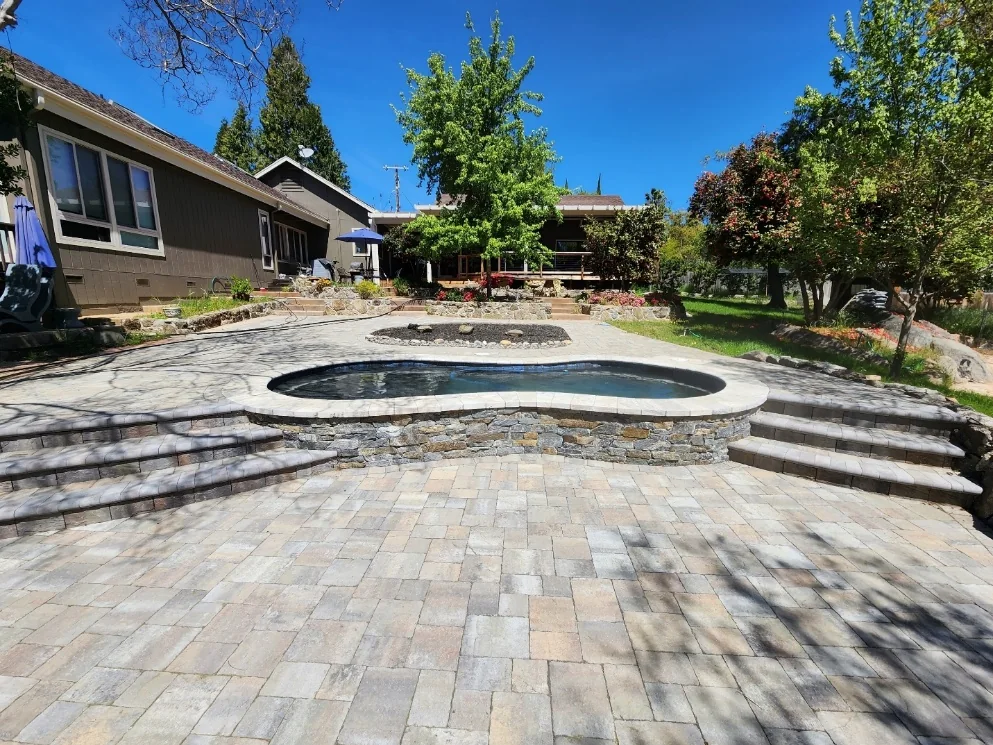
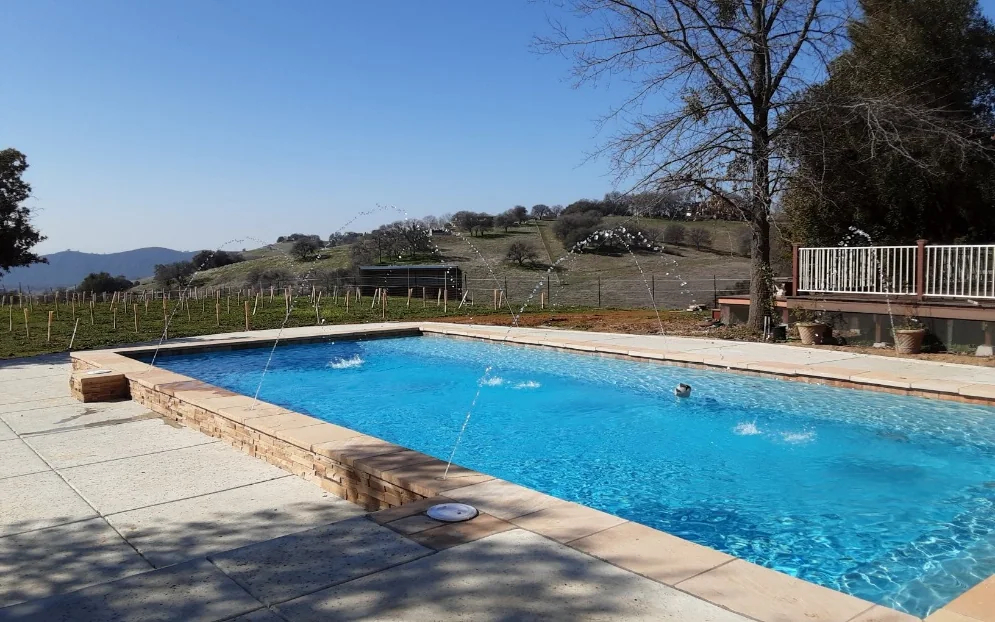
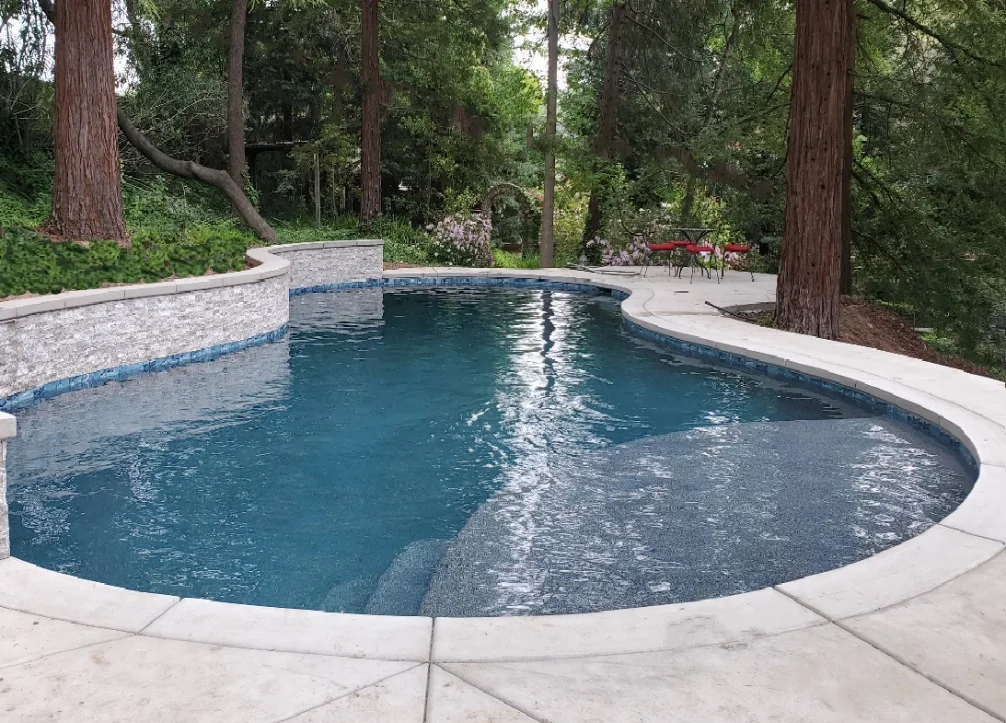
7. Raised Pools and Raised Bond Beams
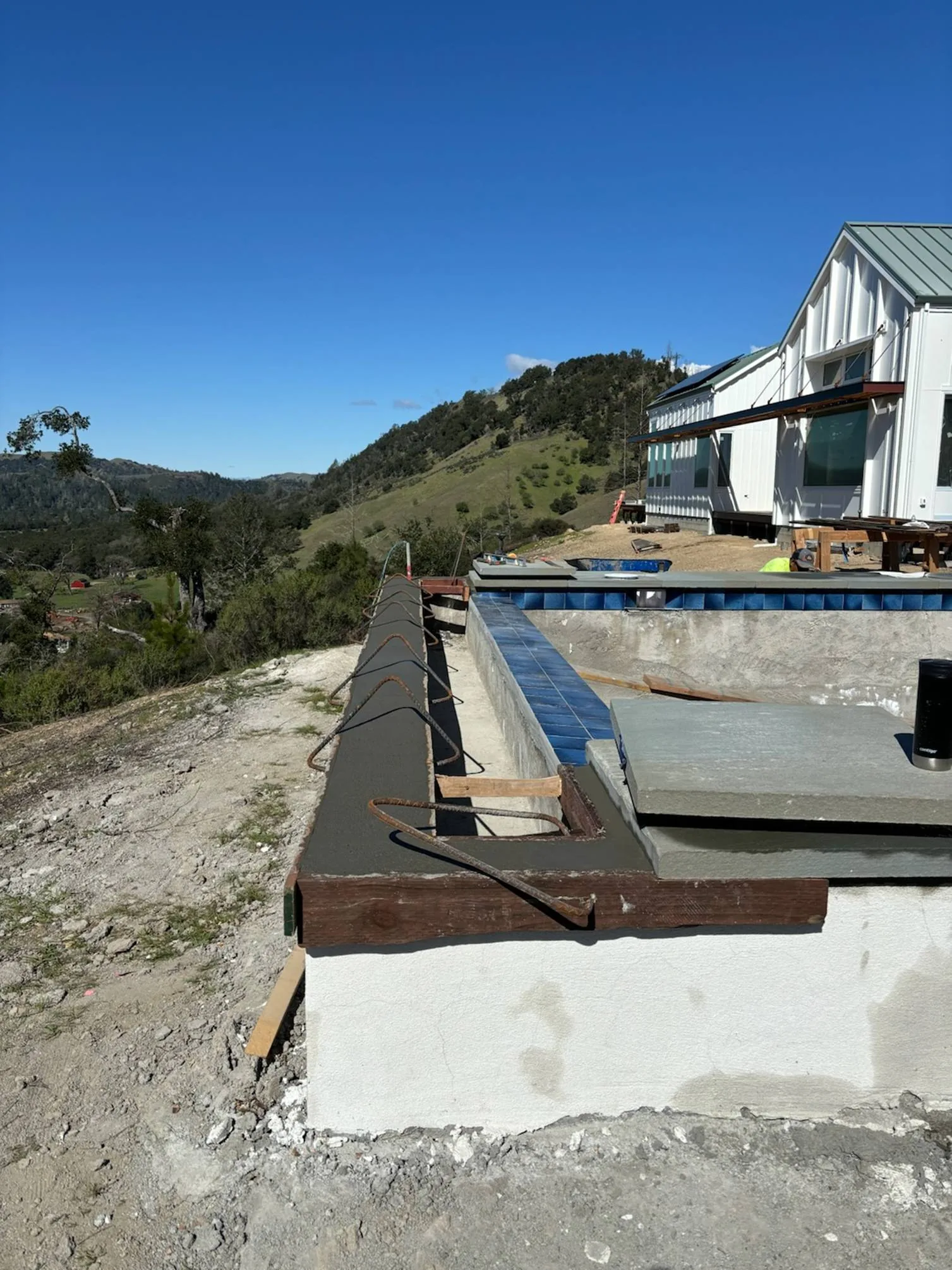
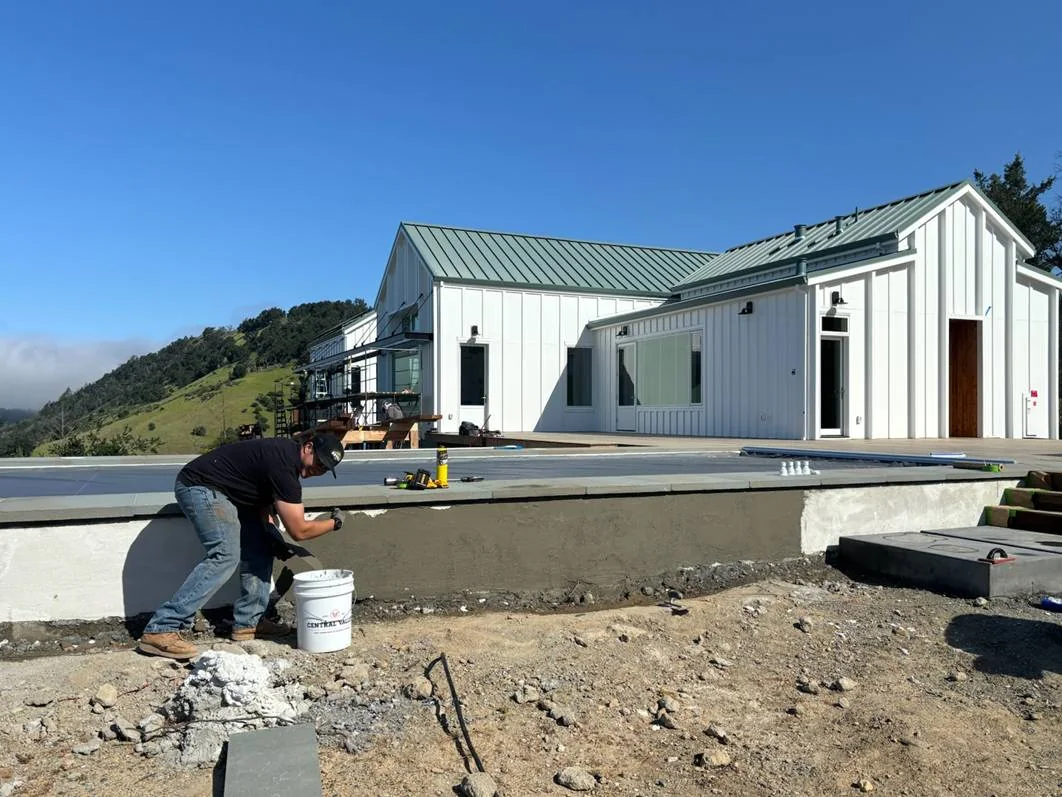
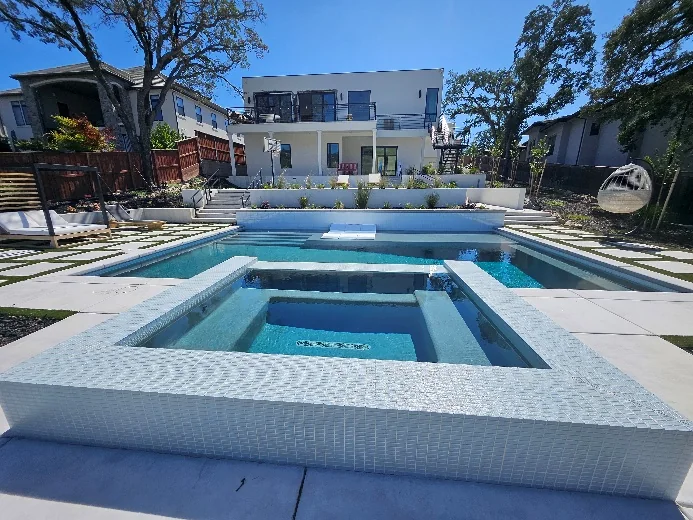
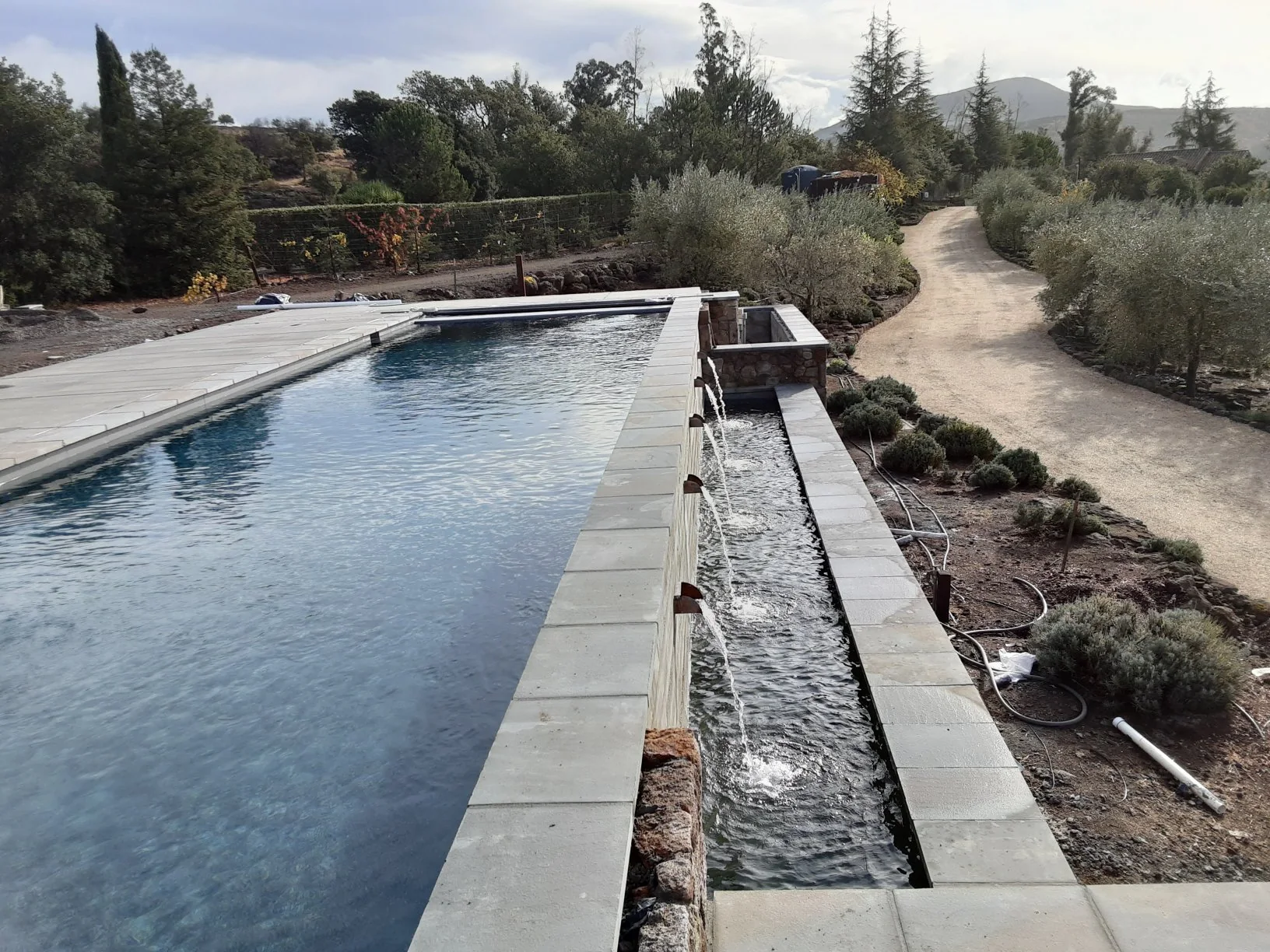
A sloped backyard can sometimes provide an opportunity to create an attractive raised pool design. Rather than excavating the entire pool to the same exterior elevation, the design may incorporate a raised bond beam, raised pool wall, or other architectural features.
This can create beautiful results, particularly when the pool is designed to take advantage of a view. However, raised structures can require additional engineering, materials, tile or stone facing, and structural work.
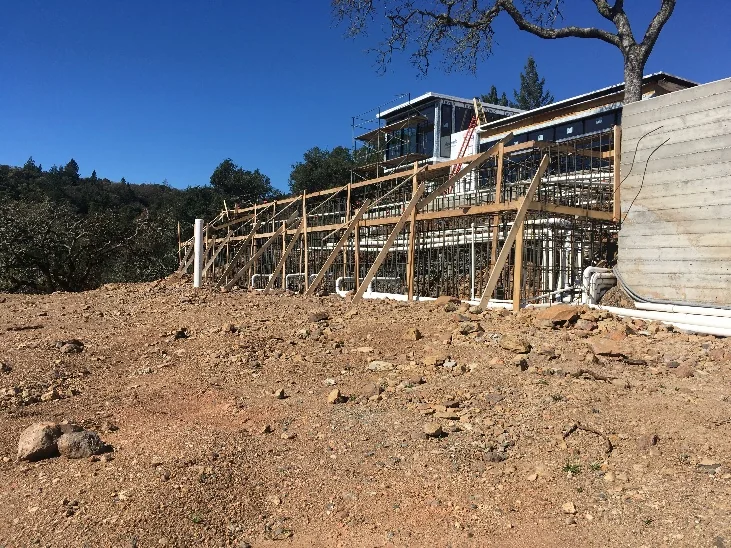
8. Vanishing-Edge or Infinity Edge Pools
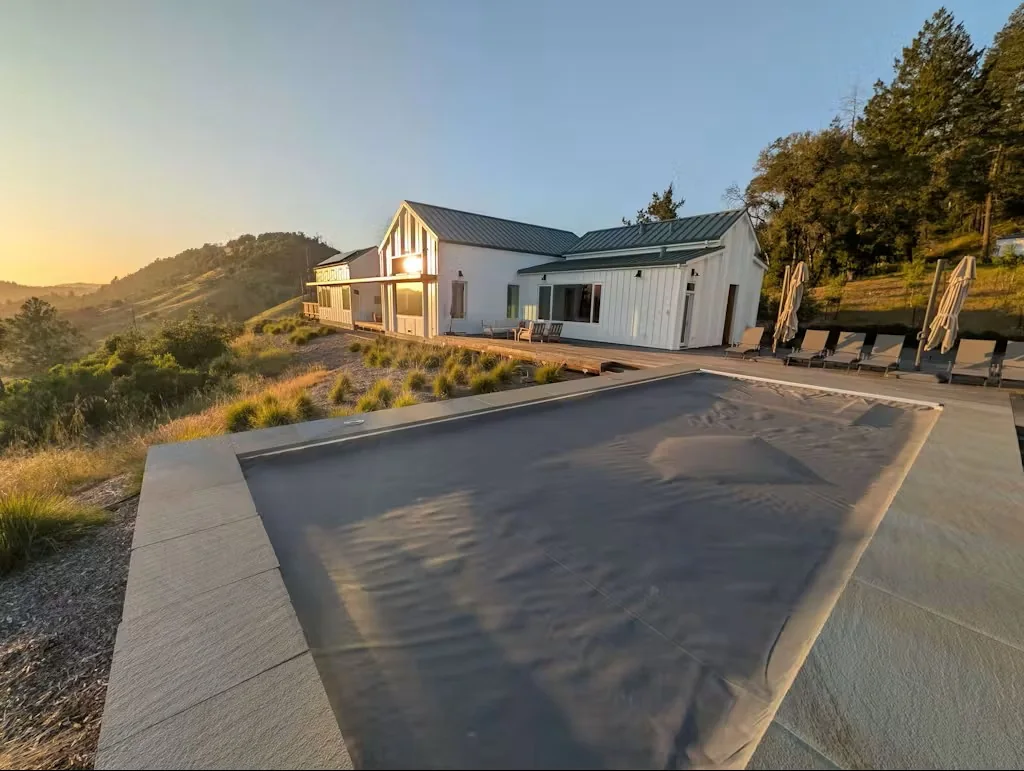
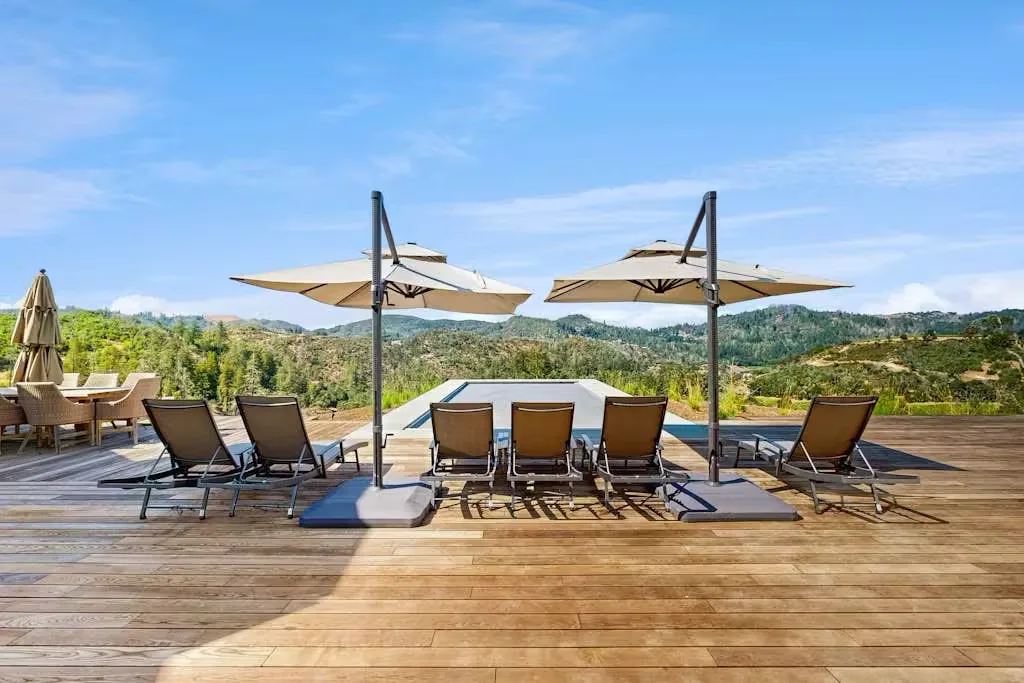
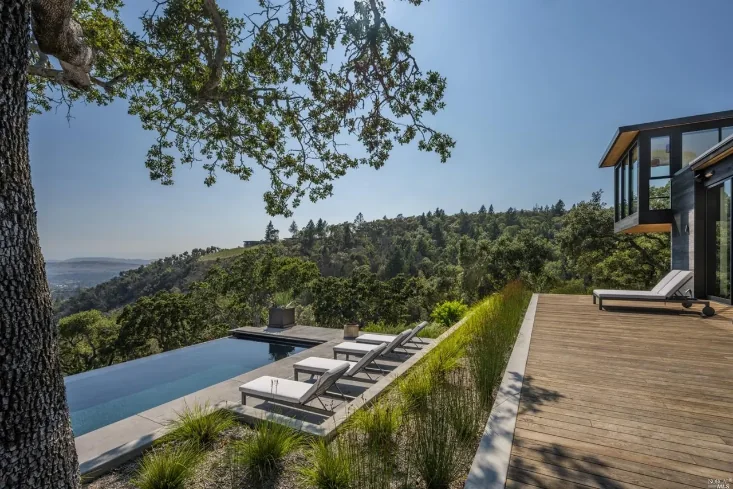
Sloped properties can be excellent candidates for a vanishing-edge or infinity edge pool.
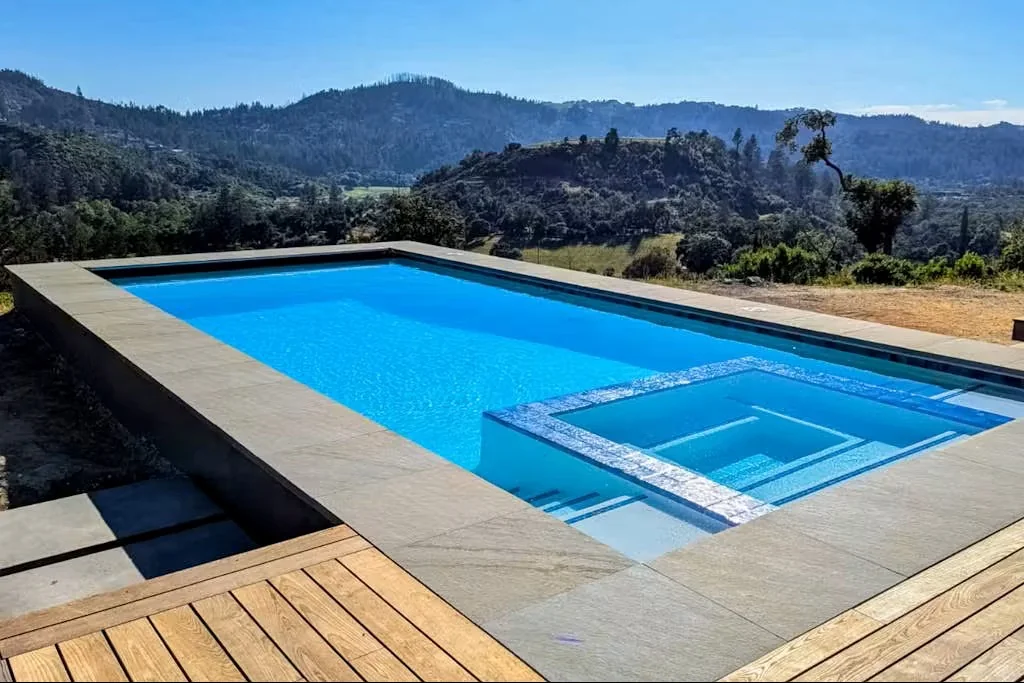
A vanishing edge can take advantage of the change in elevation and create a dramatic visual effect, particularly on properties overlooking vineyards, hills, valleys, or other scenic areas.
However, vanishing-edge or infinity edge pools are generally more complicated to build than standard pools.
They can require:
- Additional structural engineering
- A catch basin
- Additional plumbing
- Additional pumps and equipment
- Structural walls
- Precise elevations
- Additional waterproofing and finishing work
For the right property, however, the result can be spectacular.
Every Sloped Lot Is Different
There isn’t a standard “slope charge” that applies to every pool.
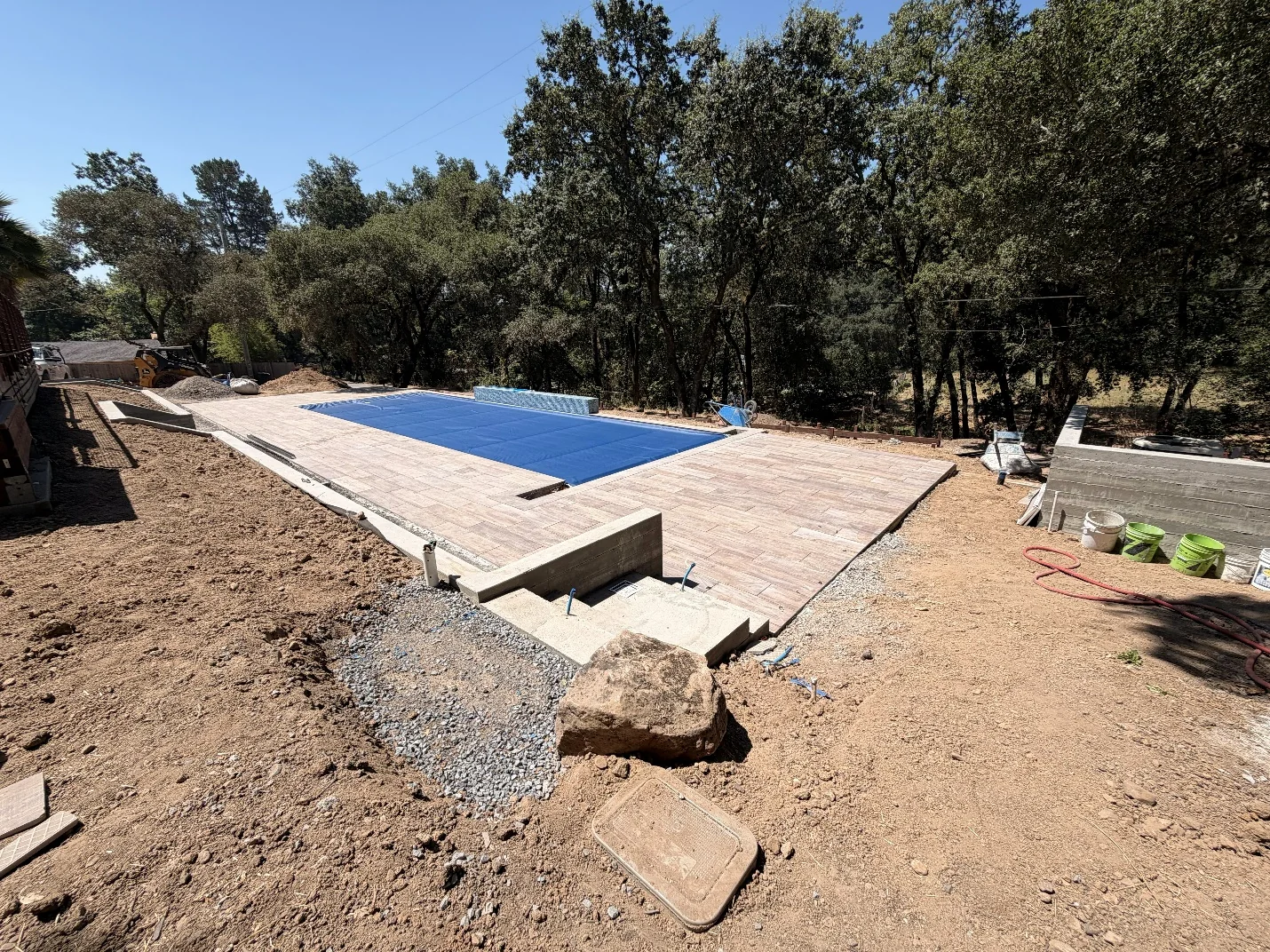
A property with a small elevation change may require very little additional work. Another property with a significant slope, difficult access, poor soil conditions, or nearby structures may require extensive engineering and structural work.
That’s why it is important to evaluate the actual property rather than relying solely on the pool’s size or shape when estimating construction costs.
Two homeowners could build the exact same size pool, but one project could cost substantially more because of the property’s slope, soil conditions, engineering requirements, or access.
How Much More Does a Sloped-Lot Pool Cost?
There is no single number that applies to every project.
The additional cost could be relatively minor on a gently sloped property, while a steep or difficult site could add tens of thousands of dollars or more to the project.
Some of the biggest cost variables include:
- Structural engineering
- Geotechnical requirements
- Additional footings
- Retaining walls
- Additional rebar or structural gunite
- Excavation and grading
- Rock or difficult soil conditions
- Drainage
- Equipment access
The best way to determine the potential cost is to evaluate the property and identify potential engineering and construction requirements as early as possible.
Planning a Pool on a Sloped Property?
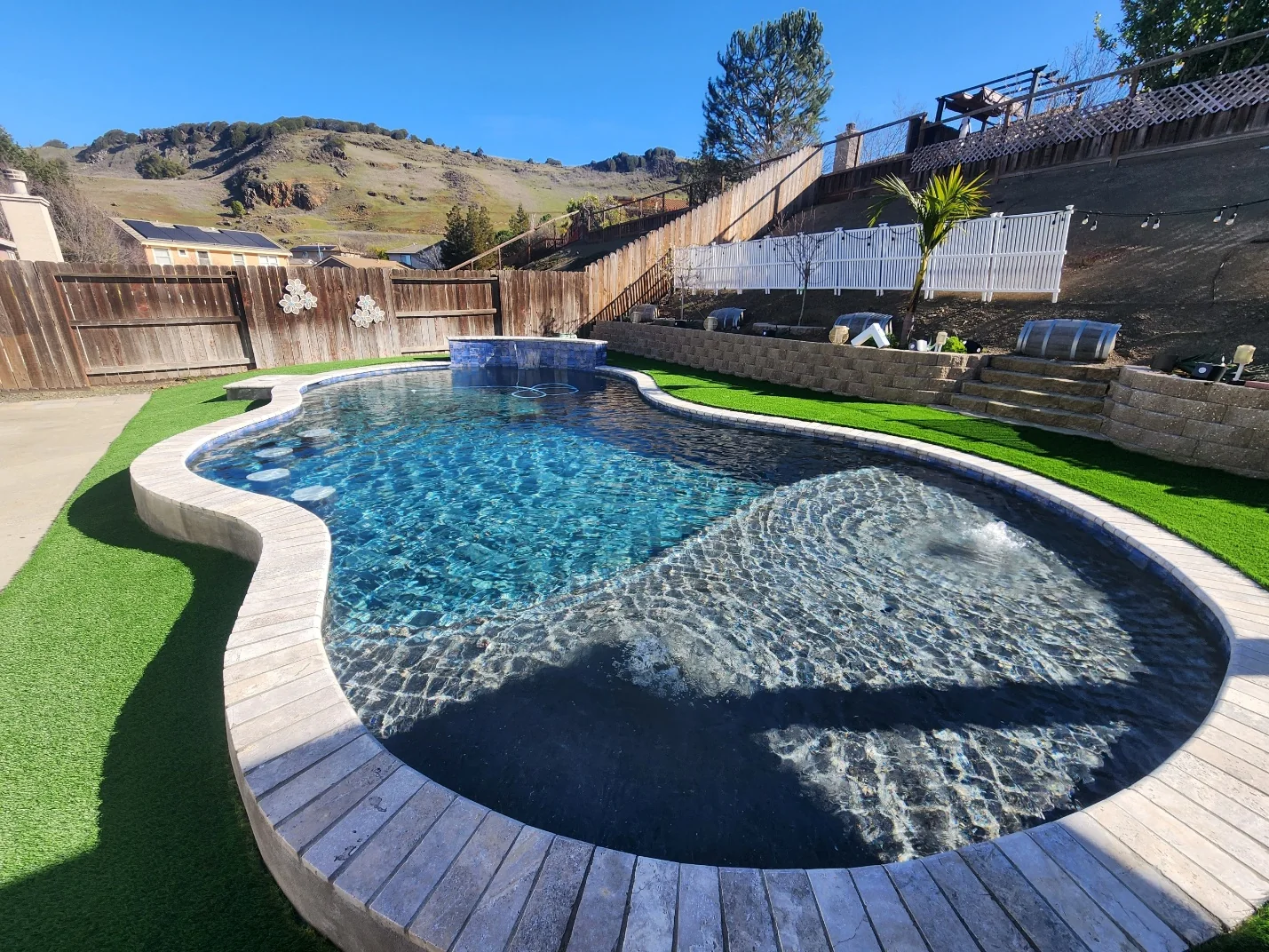
A sloped backyard doesn’t mean you can’t have the pool you’ve been envisioning. In fact, some of the most impressive pools are built on challenging properties.
The key is understanding the site conditions and engineering requirements before construction begins.
At Cookie Cutter Pools, we build custom swimming pools throughout the Sacramento region and Northern California, including Napa, Sonoma, Solano, Placer, Nevada, Yolo, and El Dorado counties, and we have experience building on sloped lots.
If you’re considering a pool on a sloped lot, request a free estimate. We will schedule an on-site appointment and provide a free quote for your property. We can help you understand what may be involved and identify potential construction challenges before you move forward.
Two Sloped-Lot Pools, From Start to Finish
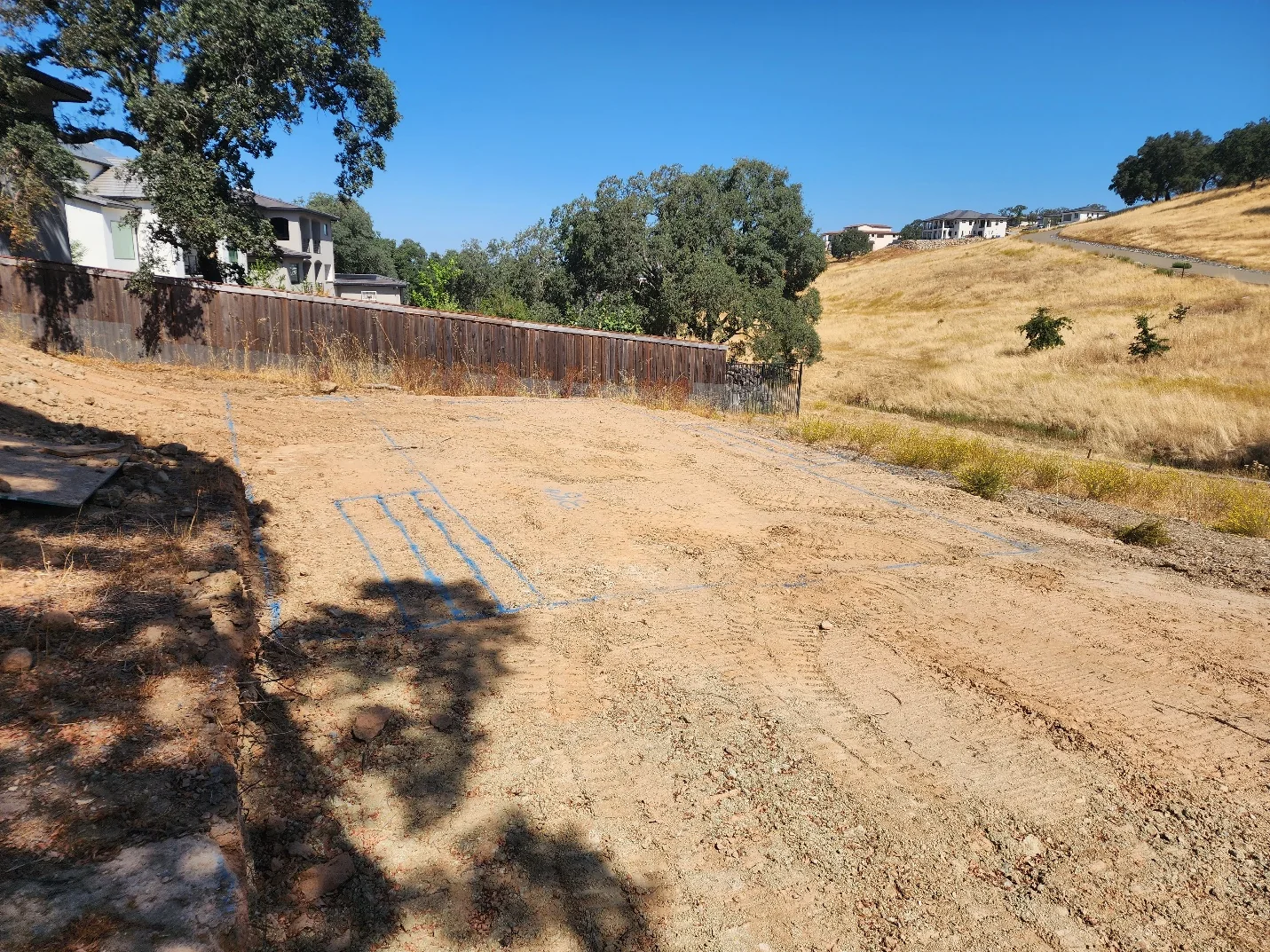
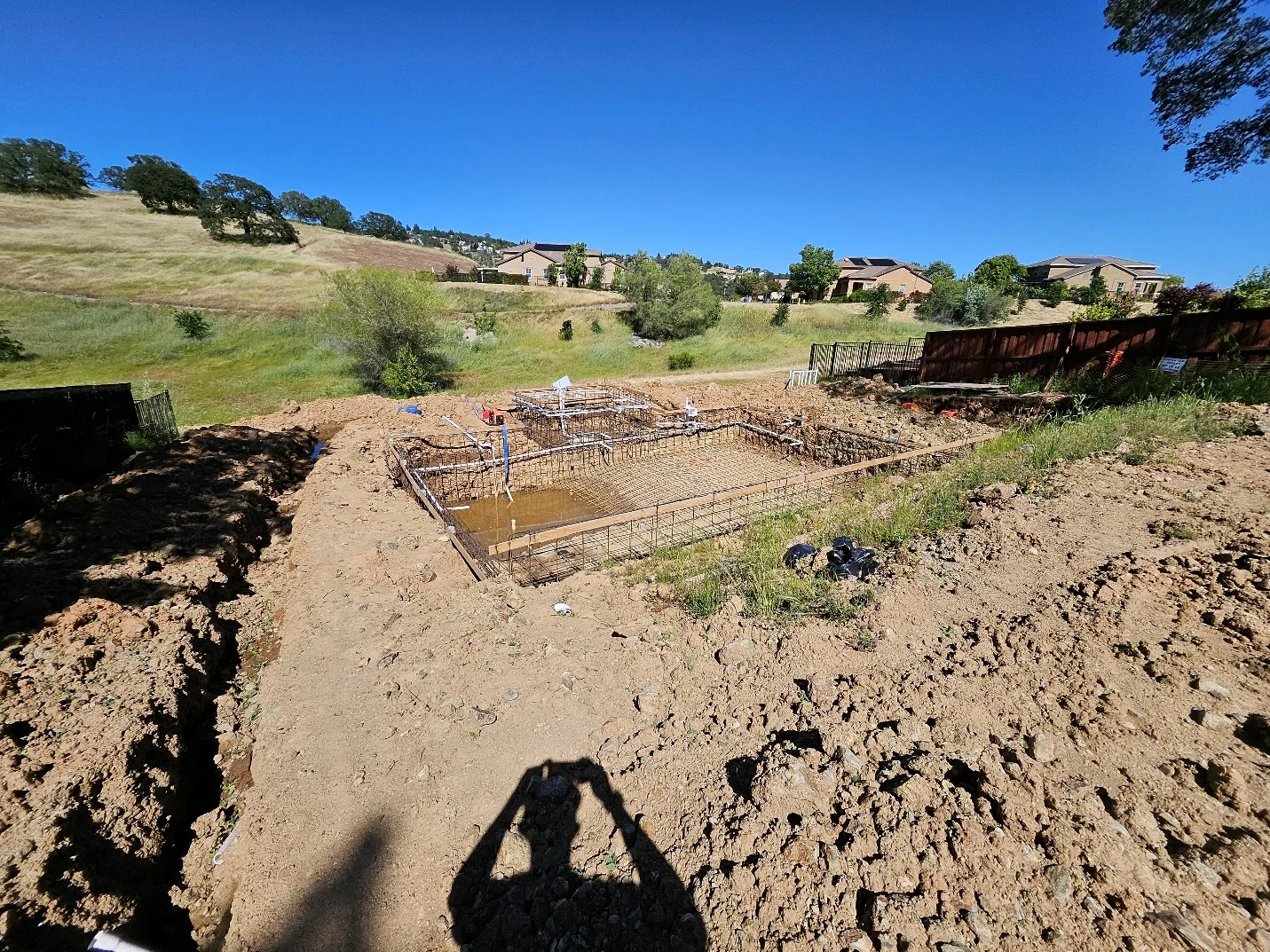
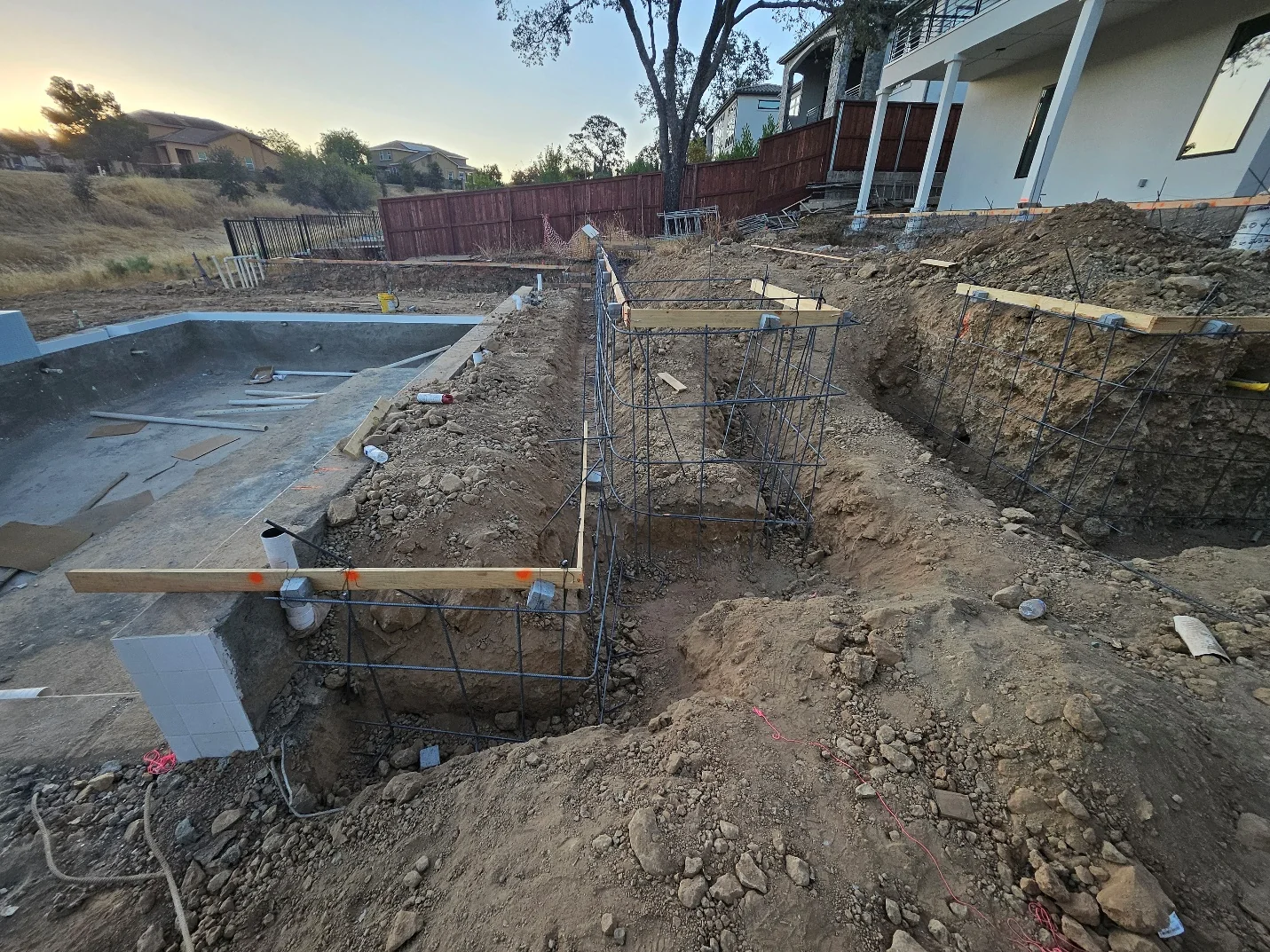
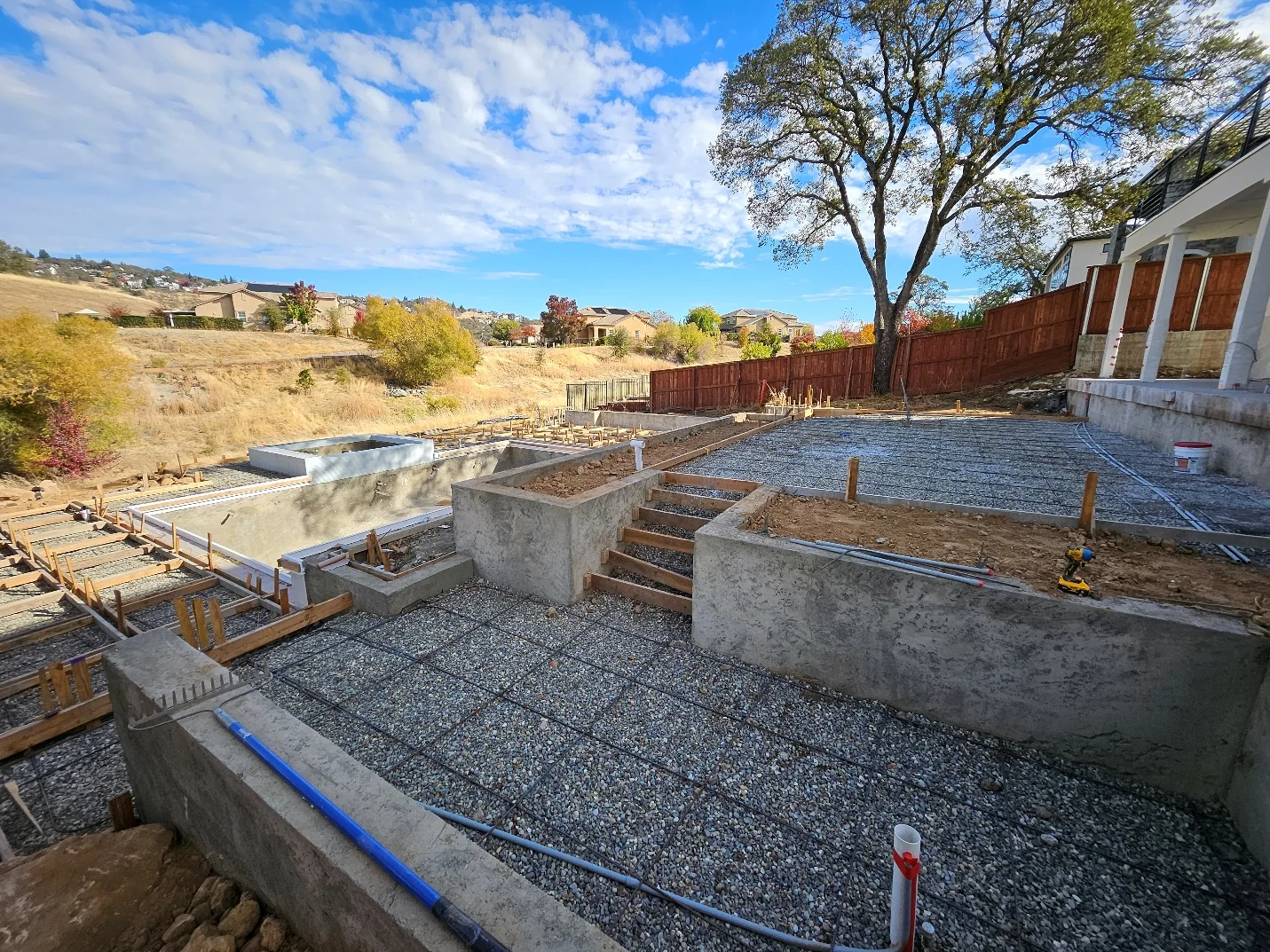
Example 1: Pool and Raised Spa in Folsom
This Folsom project used retaining walls to turn a sloped lot into a finished pool and raised spa.
Example 2: Pool, Spa, and Automatic Cover in Calistoga
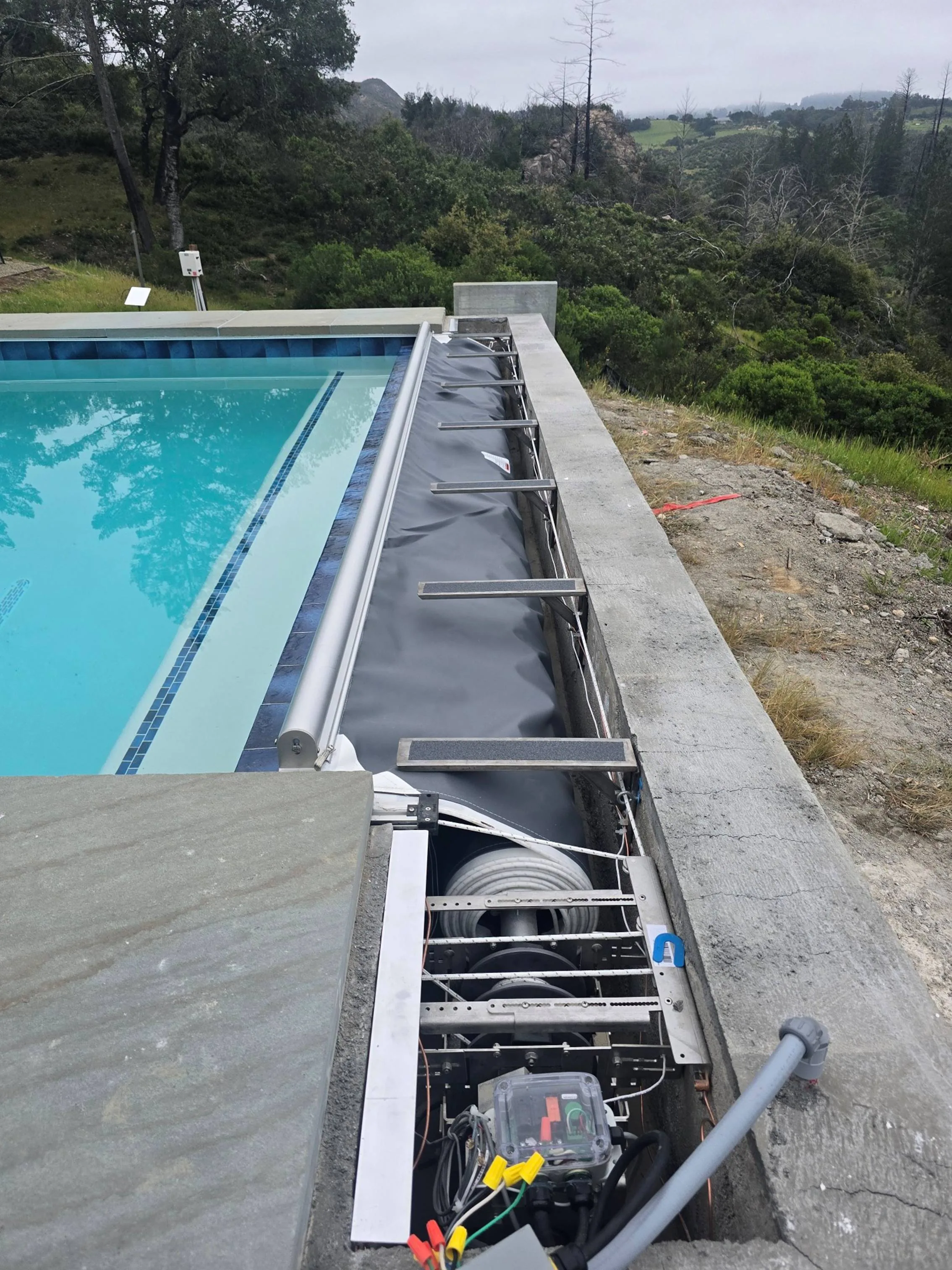
This Calistoga project required substantial footings and structural work before the pool, spa, and automatic pool cover came together.